
Why choose Polish apples?
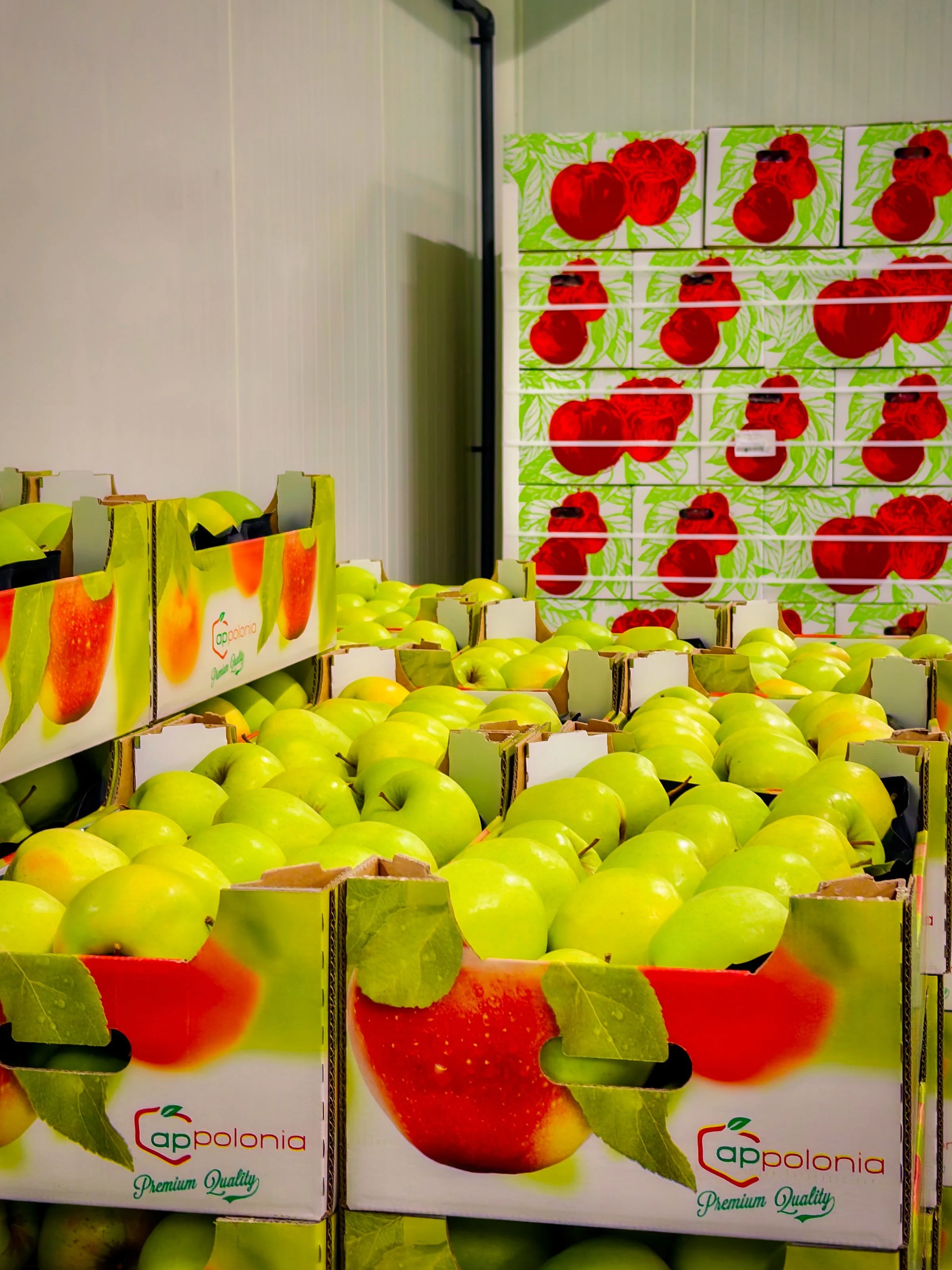
Poland grows more apples than any other country in the European Union. In a typical year the harvest is about 4 million tonnes, and roughly one in every three apples grown in the EU comes from Polish orchards. For importers and retailers, that means large volumes, a wide choice of varieties and fruit available in every month of the year.
How many apples does Poland produce?
Apples are grown on about 80,000 fruit farms across some 150,000 hectares of orchards. Poland exports around 800,000 tonnes of fresh apples a year.
The centre of production is Mazovia, south of Warsaw. The Grójec and Warka area alone produces almost half of Poland’s apples and is often called the largest orchard in Europe.
Why do Polish apples have such good colour and flavour?
In the weeks before harvest, central Poland has warm days and cold nights. In the Grójec area, the difference between day and night temperatures can reach 20°C. The cold nights give apples a deeper blush and help build their flavour. The fruit also keeps a natural acidity, which balances the sweetness and gives it a strong aroma.
Two Polish apples hold the EU’s Protected Geographical Indication: the Grójec apple and the Łącko apple. The label confirms that their quality comes from the region where they are grown.
How are Polish apples grown?
Today’s Polish orchards are planted in straight, narrow rows with slim tree crowns, so sunlight reaches every apple and colours it evenly. Most orchards also have:
- hail nets, now needed almost every year as summer storms become more common
- frost protection, often overhead sprinklers that protect the blossom during late spring frosts
- irrigation, to keep fruit size and quality steady in dry seasons
Which apple varieties does Poland grow?
Since 2014, when the Russian market closed, Polish growers have replanted their orchards with the varieties that buyers in other markets ask for. Gala is now the most widely grown variety in Poland. Golden Delicious, Red Delicious, Jonagold, Champion and Ligol, a Polish-bred variety, are also popular. Ligol alone accounts for 7–9% of the national harvest. Between them, these varieties cover everything from fully red to two-coloured and green apples.
Breeding continues too. Developing a new variety takes about 20 years, and Polish breeders are now working on red-fleshed apples that are high in antioxidants and do not turn brown when cut.
Are Polish apples available all year round?
The first apple storage facility in the Grójec region was built in 1915, by a grower who wanted to keep selling apples at the Warsaw market after the harvest season ended. Today, apples are kept in controlled-atmosphere chambers, where low oxygen, temperature and humidity are carefully controlled. In these conditions apples keep their appearance, flavour and aroma for up to 12 months, so buyers can source Polish apples in every month of the year.
Before packing, the fruit goes through sorting lines that grade every apple by colour, size, weight and visible damage. Many lines also check internal quality without cutting the fruit. Each delivery is weighed and labelled to the grower who supplied it, so every batch can be traced back to its orchard.
Are Polish apples grown safely?
Many Polish growers work under Integrated Production (IP), a state-supervised system that puts biological plant protection first, uses chemical treatments only when they are justified, and includes regular residue testing. You can read more in our article What is Integrated Production?